

The annual benefits “open season” can be a challenging time for federal employees and retirees. This year’s benefits “open season” which started November 10,2025 and will conclude December 8,2025, is no exception. For plan year 2026, employees and retirees must decide which health insurance plan they want to enroll in, whether or not to enroll in a separate dental insurance and a separate vision plan, and whether to continue enrollment in the federal flexible spending account program (FSAFEDS). This column discusses 10 of the biggest mistakes that federal employees and retirees have made over the years during “open season”.
- Mistake #1. Choosing an FEHB program health plan based solely on premium cost. The health plan with the cheapest premium is for most employees and retirees not the best plan. Similarly, a higher premium cost health plan does not necessarily mean that the health plan is the best plan the employee or retiree and family members, and in particular offers expanded access to the best clinics, doctors, hospitals and prescription drug coverage.
- Mistake #2. Not checking the network of providers. Whether an employee or a retiree is staying with their current year 2025 health plan or selecting a new health plan for 2026, it is important that before remaining in the current year health plan or choosing a new health plan, an employee or retiree should assume that any doctor or any hospital is included in the plan’s medical provider network for 2026. Employees and retirees do not want to find out that doctors they and family members use will not be in the health plan’s network. If their doctor is not in the network, then the employee or retiree will either have to find another doctor who is in-network or pay more out-of-pocket in order to use their doctor.
- Mistake #3. Assuming self-plus-one enrollment is less in premium cost compared to self and family enrollment. For most FEHB program health plans, self-plus-one enrollment is less costly with respect to premium cost. However, for plan year 2026, there are 39 FEHB health plans in which self-and-family enrollment is less costly than self plus one enrollment, and nine plans have the same premium costs.
- Mistake #4. Not checking the FEHB program health plans drug formulary. Drug formularies vary from carrier to carrier and plan to plan. Employees and retirees are therefore advised to check to make sure that their medications and their family’s medications are included in the plan’s drug formulary. Prescription drugs can be very expensive. It is therefore important that employees and retirees annually review their FEHB health plan’s drug formulary to make sure their family’s prescriptions are included and their approximate cost.
- Mistake #5. Failure to look beyond premium cost when considering an FEHB program plan. A low premium cost may come with higher overall costs, including higher deductibles, co-payments, co-insurance and higher out-of-pocket maximums.
Learn more about your retirement benefits at our No-Cost webinars, featuring Ed Zurndorfer -
- Mistake #6. Failure to take advantage of tax-favorable ways to pay out-of-pocket health care expenses . Tax-favorable ways to pay health care expenses include health care flexible spending accounts (HCFSAs) and health savings accounts (HSAs) both of which can help minimize the increasing cost of out-of-pocket medical expenses including deductibles, co-payments and co-insurance. All permanent federal employees are eligible to set aside a portion of their gross salary (maximum of $3,400 during 2026) to an HCFSA in order to help pay out-of-pocket medical, dental and vision expenses, including deductibles, co-payments, co-insurance and medical expenses health, dental or vision insurance will not cover. For example, reimbursements for medical travel.
Another tax -favorable way to pay for out-of-pocket medical, dental and vision expenses is using an HSA. The difference between an HCFSA and an HSA is that with an HCFSA, employees can be enrolled in any health insurance plan. They also do not have to be enrolled in the FEHB program. With an HSA, an employee or retiree has to be enrolled in a high-deductible health plan in order to make contributions to the HSA. The HCFSA and the HSA contributions are both pre-taxed and qualified distributions are tax-free.
- Mistake #7. Deciding to get out of the FEHB program due to high premium costs. The overall average FEHB program premium increase for the 2026 plan year is 10.2 percent, down from an 11.2 percent increase in 2025. The average enrollee premium share of 25 to 28 percent of the premium cost is increasing 12.3 percent during 2026, down from the 13.5 percent increase in 2025. Many employees are upset about the double digit increase in the average premium, especially since they are due a maximum one percent government-wide pay increase in 2026. Some employees are considering other health insurance coverage, including joining a spouse’s group health plan, or purchasing health insurance on the ACA health care exchanges. This is not a good idea for employees because: (1) The FEHB plan is in reality the least expensive health insurance program available to federal employees, especially because the federal government pays on average 72 to 75 percent of the premiums; and (2) While an employee can disenroll from the FEHB program during the “open season” and then re-enroll in a future open season, then if the employee wants to be eligible to have FEHB program group health insurance when they retire after rejoining the FEHB program, they will have to work for an additional five consecutive years being enrolled in the FEHB program in order to keep FEHB program health insurance in retirement.
- Mistake #8. Dropping FEHB program health insurance while a federal retiree. Unlike an employee who drops out of the FEHB program and rejoins the program during a subsequent “open season,” a federal retiree who drops out of the FEHB program can never rejoin.
- Mistake #9. A married federal employee decides (with his or her spouse’s written permission) not to give the spouse a survivor annuity. Those federal employees who are married and whose spouse is a non-federal employee and included on the employee’s FEHB program health insurance (as part of self plus one or family coverage) can remain on the employee’s FEHB program insurance when the employee retirees. This is true whether or not the employee chooses to give the spouse a survivor annuity. However, if no survivor annuity is given and the retiree predeceases the spouse, then the surviving spouse loses eligibility to retain FEHB program enrollment.
- Mistake #10. Enrollment in a dental or a vision insurance plan through the Federal Employees Dental and Vision Insurance Program (FEDVIP) when it may not be necessary or there are alternatives. The FEDVIP has been available to federal employees and retirees and family members since 2007. Enrollment in the program is voluntary. Employees pay the full premium cost of a dental and/or vision insurance plan. Employees and retirees enroll in the program during the “open season.” However, there are employees and retirees who enroll in the FEDBIP when in fact there may be reasons not to enroll. For example, their and/or their family’s dental and vision expenses are not excessive. Instead of purchasing insurance, they could self-insure or pay dental and vision expenses using their HCFSA (employees only) or HSAs (employees and retirees) to pay their dental and vision expenses. A second reason not to enroll in the FEDVIP is there may be an alternative dental or vision insurance plan. Because employees and retirees pay the full cost of FEDVIP premiums, an employee or a retiree is advised to check out individual dental and vision insurance plans. There are several insurance companies that offer these plans. Employees and retirees may want to use a licensed life/health insurance broker who will assist them in finding a dental/vision insurance plan that best meets their and their family’s needs.
Edward A. Zurndorfer is a CERTIFIED FINANCIAL PLANNER™ professional, Chartered Life Underwriter, Chartered Financial Consultant, Chartered Federal Employee Benefits Consultant, Certified Employees Benefits Specialist and IRS Enrolled Agent in Silver Spring, MD. Tax planning, Federal employee benefits, retirement and insurance consulting services offered through EZ Accounting and Financial Services, and EZ Federal Benefits Seminars, located at 833 Bromley Street - Suite A, Silver Spring, MD 20902-3019 and telephone number 301-681-1652. Raymond James is not affiliated with and does not endorse the opinions or services of Edward A. Zurndorfer or EZ Accounting and Financial Services. The information has been obtained from sources considered to be reliable, but we do not guarantee that the foregoing material is accurate or complete. While we are familiar with the tax provisions of the issues presented herein, as Financial Advisors of RJFS, we are not qualified to render advice on tax or legal matters. You should discuss tax or legal matters with the appropriate professional.
You Might Also Enjoy This Podcast


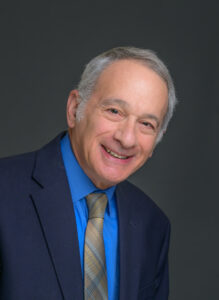
Ed Zurndorfer, EA, ATA, CFP®, CLU®, ChFC®, CEBS®, ChFEBC℠: Federal Employee Benefits Expert
A former career Federal employee, Ed has published a staggering 1,200+ separate articles on Federal Benefits and Retirement!
Just “Google” his name, and you are likely to find a plethora of sites that contain his writings. Drawn to its mission to reach, teach
and serve Feds, Serving Those Who Serve is the only financial planning practice with which Ed has chosen to affiliate in over
20 years teaching. In addition to conducting Federal Benefits seminars for Serving Those Who Serve, you can find Ed’s
writings here on our blog in the FedZone, and on Fed-Soup, MyFederalRetirement, FederalNews Radio and NITP.
He is a member of the Maryland Society of Accountants, the National Association of Enrolled Agents, the International Society of Certified Employee Benefits Specialists, the Financial Planning Association, the National Association of Health Underwriters,
and the Society of Financial Service Professionals. Since 1999, Ed has taught many thousands of Federal employees about
their benefits, in person and at Federal agencies all over the country. Ed is a true national treasure.
Edward A. Zurndorfer is a CERTIFIED FINANCIAL PLANNER™ professional, Chartered Life Underwriter, Chartered Financial Consultant, Chartered Federal Employee Benefits Consultant, Certified Employees Benefits Specialist and IRS Enrolled Agent in Silver Spring, MD. Tax planning, Federal employee benefits, retirement and insurance consulting services offered through EZ Accounting and Financial Services, and EZ Federal Benefits Seminars, located at 833 Bromley Street - Suite A, Silver Spring, MD 20902-3019 and telephone number 301-681-1652. Raymond James is not affiliated with and does not endorse the opinions or services of Edward A. Zurndorfer or EZ Accounting and Financial Services. The information has been obtained from sources considered to be reliable, but we do not guarantee that the foregoing material is accurate or complete. While we are familiar with the tax provisions of the issues presented herein, as Financial Advisors of RJFS, we are not qualified to render advice on tax or legal matters. You should discuss tax or legal matters with the appropriate professional.