

According to an analysis from the Employee Benefits Research Institute, there are currently (2025) 3.2 million active health care flexible spending account (HCFSAs) in the US. A study from Benepass found that 86 percent of US employers offer HCFSAs, suggesting a large potential employee base for enrollment.
Permanent federal employees – full-term and part-time – are eligible to enroll in a HCFSA offered through the “FedFlex” program. Information about the program can be obtained at https://www.fsafeds.gov. Unfortunately, there is only a small percentage of federal employees participating in the FedFlex program HCFSA. This is true in spite of the fact that an employee is not required to be enrolled in the Federal Employees Health Benefits (FEHB) program in order to participate in the HCFSA. An employee can be enrolled in a non-federal HCFSA that the spouse is enrolled in. Or the federal employee can be a Uniformed Services retiree and enrolled in TriCare. The key requirement to enroll in the FSAFEDS HCFSA is that a federal employee be eligible to enroll in the FEHB program, but does not have to be enrolled.
The purpose of enrolling in an HCFSA is to help an employee pay any medical, dental and vision expenses incurred by the employee and eligible family members (spouses and dependents) in a tax-preferential manner. The HCFSA is funded using deductions from an employee before taxed salary. The before-taxed dollars are set aside before all taxes, including federal and state income taxes, and Social Security (FICA) and Medicare Part A (Hospital Insurance Tax) payroll taxes are deducted.
HCFSA owners can request tax-free withdrawals to pay health, dental and vision insurance plan deductibles, co-insurance, co-payments and most expenses that insurance will not cover or pay. No health, dental and vision insurance plan pays for every expense at 100 percent coverage. The question then becomes what is the best way to pay for these out-of-pocket expenses with after-taxed dollars or before-taxed dollars. Most employees would agree that using before-taxed dollars is the preferred way. That is why every federal employee should consider enrolling in the HCFSA.
FSAFEDS conducts an “open season” enrollment every year from the second Monday of November through the second Monday of December. Between November 10, 2025 and December 8, 2025, federal employees can enroll in the HCFSA for plan year 2026 which starts January 1, 2026. If an employee is enrolled in an HCFSA during 2025, the employee has to reenroll for 2026. HCFSA enrollment does not rollover automatically from one plan year to the next. A minimum of $100 and a maximum of $3,400 can be set aside to an HCFSA for plan year 2026.
It is a perfect time during this HCFSA “open season” to educate federal employees about HCFSAs and to debunk some common HCFSA myths that could not result in some not enrolling in an HCFSA for plan year 2026. By educating federal employees about FSA rules and disposing of three HCFSA myths, it is hoped that more employees will enroll and get the most of their tax-free healthcare dollars.
Learn more about your retirement benefits at our No-Cost webinars, featuring Ed Zurndorfer -
Myth #1. Federal employees who set aside part of their gross salary during 2025 into a HCFSA have a spending deadline of December 31, 2025, with no rollover provisions. This is not true. Since 2015, a rollover of a maximum amount of unused HCFSA funds is permitted from one plan year to the next. For 2025, those employees who realize that they will have unused HVFSA funds may rollover a maximum $660 of unused funds to plan year 2026. TO do so, the employee must reenroll in the HCFSA for 2026. This is the case even if an employee chooses not to add to his or her HCFSA via payroll deduction during 2026.
Myth #2. An HCFSA can be used to pay or reimburse for a limited number of medical, dental and vision expenses. The FSAFEDs HCFSA pays or reimburses for a variety of medical expenses including massage therapy, prescriptions, diabetes testing and supplies, wheelchairs and walkers, birth control pills, invitro fertilization, subblock and transportation costs, if purely for medical purposes.
Myth #3. It does not make financial sense for an employee to enroll in an HCFSA if the employee will not use up all of the set-aside funds and lose what is not used. By contributing to an HCFSA an employee is reducing federal and state taxable income. By most estimates, 40 percent in overall taxes, based on individual federal and state marginal tax brackets. In addition, there are easy-to-use tools and apps at www.fsafeds.com, helping HCFSA owners project tax savings. It also helps map out health care spending needs and can quickly shop for the latest FSA-eligible products.
In short, federal employees who enroll in a FSAFEDS HCFSA will help themselves become efficient and savvy health care consumers.
Edward A. Zurndorfer is a CERTIFIED FINANCIAL PLANNER™ professional, Chartered Life Underwriter, Chartered Financial Consultant, Chartered Federal Employee Benefits Consultant, Certified Employees Benefits Specialist and IRS Enrolled Agent in Silver Spring, MD. Tax planning, Federal employee benefits, retirement and insurance consulting services offered through EZ Accounting and Financial Services, and EZ Federal Benefits Seminars, located at 833 Bromley Street - Suite A, Silver Spring, MD 20902-3019 and telephone number 301-681-1652. Raymond James is not affiliated with and does not endorse the opinions or services of Edward A. Zurndorfer or EZ Accounting and Financial Services. The information has been obtained from sources considered to be reliable, but we do not guarantee that the foregoing material is accurate or complete. While we are familiar with the tax provisions of the issues presented herein, as Financial Advisors of RJFS, we are not qualified to render advice on tax or legal matters. You should discuss tax or legal matters with the appropriate professional.
You Might Also Enjoy This Podcast


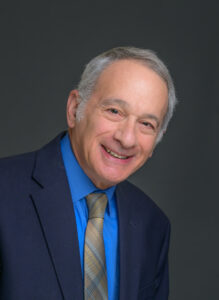
Ed Zurndorfer, EA, ATA, CFP®, CLU®, ChFC®, CEBS®, ChFEBC℠: Federal Employee Benefits Expert
A former career Federal employee, Ed has published a staggering 1,200+ separate articles on Federal Benefits and Retirement!
Just “Google” his name, and you are likely to find a plethora of sites that contain his writings. Drawn to its mission to reach, teach
and serve Feds, Serving Those Who Serve is the only financial planning practice with which Ed has chosen to affiliate in over
20 years teaching. In addition to conducting Federal Benefits seminars for Serving Those Who Serve, you can find Ed’s
writings here on our blog in the FedZone, and on Fed-Soup, MyFederalRetirement, FederalNews Radio and NITP.
He is a member of the Maryland Society of Accountants, the National Association of Enrolled Agents, the International Society of Certified Employee Benefits Specialists, the Financial Planning Association, the National Association of Health Underwriters,
and the Society of Financial Service Professionals. Since 1999, Ed has taught many thousands of Federal employees about
their benefits, in person and at Federal agencies all over the country. Ed is a true national treasure.
Edward A. Zurndorfer is a CERTIFIED FINANCIAL PLANNER™ professional, Chartered Life Underwriter, Chartered Financial Consultant, Chartered Federal Employee Benefits Consultant, Certified Employees Benefits Specialist and IRS Enrolled Agent in Silver Spring, MD. Tax planning, Federal employee benefits, retirement and insurance consulting services offered through EZ Accounting and Financial Services, and EZ Federal Benefits Seminars, located at 833 Bromley Street - Suite A, Silver Spring, MD 20902-3019 and telephone number 301-681-1652. Raymond James is not affiliated with and does not endorse the opinions or services of Edward A. Zurndorfer or EZ Accounting and Financial Services. The information has been obtained from sources considered to be reliable, but we do not guarantee that the foregoing material is accurate or complete. While we are familiar with the tax provisions of the issues presented herein, as Financial Advisors of RJFS, we are not qualified to render advice on tax or legal matters. You should discuss tax or legal matters with the appropriate professional.