














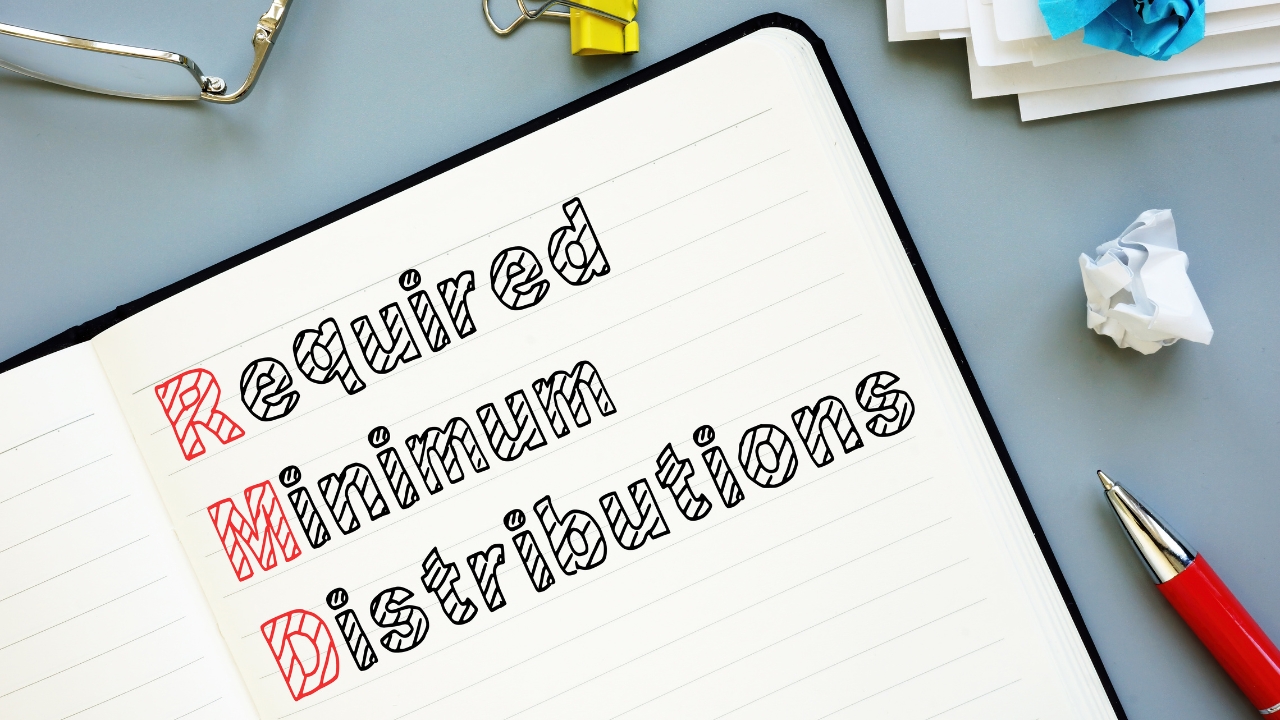

Required minimum distributions (RMDs) are mandatory, taxable withdrawals from pre-tax retirement accounts, like a Thrift Savings Plan (TSP) or traditional IRA. They’re not optional, and they can push your income higher, raising your tax bill and potentially rippling into your Medicare premiums.
Often, Feds build their retirement income around a pension and Social Security, allowing tax-deferred accounts to continue growing. By the time RMDs begin, those balances can be large enough to create a sharp jump in taxable income. With updated TSP RMD rules for 2026 pushing the start age later, the planning window is longer, but so is the risk of larger withdrawals. This is what makes first RMD planning so important.
The SECURE 2.0 Act shifted RMD starting ages so they are now based on your birth year. For many current retirees, the age is now 73, while younger workers may not have to start taking withdrawals until age 75.
Your first RMD can be delayed into the following year, but that may mean taking two distributions in one tax year, which can further increase your taxable income.
Check the official IRS documentation to confirm your personal start year.
If you retire before your RMDs begin, you may have some lower-income years that create a bit of flexibility. Taking modest withdrawals from pre-tax accounts during that window may reduce your balance before distributions become mandatory. This typically means smaller RMDs in the future, helping to keep taxable income more predictable in later years.
Required minimum distributions increase your taxable income, which can push you into a higher tax bracket and increase how much of your Social Security is taxable.
It can also trigger Income-Related Monthly Adjustment Amount (IRMAA) surcharges on your Medicare Part B and Part D premiums. This calculation uses a two-year lookback, so a large RMD could raise your Medicare costs two years in the future. This is a delayed cost that many Feds fail to include in their withdrawal strategy.
Most of the pain around RMDs comes from waiting too long to address them. These are the mistakes that Feds generally run into the most:
Once you’ve accounted for your gap-year withdrawals, a few additional adjustments may help keep your income more stable over time. For example, coordinating withdrawals with your pension and Social Security may help you avoid stacking income in the same year.
If Roth conversions are part of your strategy, consider breaking them up over several years to stay within your current tax bracket. Also, review your tax withholding to avoid underpayment surprises.
If you’re charitably inclined and over the age of 70 1/2, a Qualified Charitable Distribution may reduce the taxable income of your RMDs.
RMDs don’t have to be an unpleasant surprise. Prepare yourself by knowing your start age, using gap years to reduce future spikes, and modeling how forced withdrawals are likely to interact with your taxes and Medicare premiums.
If you’re ready to get ahead of your RMDs, the team at Serving Those Who Serve is here to help. Reach out to [email protected] to schedule a personal appointment.
The information has been obtained from sources considered reliable but we do not guarantee that the foregoing material is accurate or complete. Any opinions are those of Serving Those Who Serve writers and not necessarily those of RJFS or Raymond James. Any information is not a complete summary or statement of all available data necessary for making an investment decision and does not constitute a recommendation. Investing involves risk and you may incur a profit or loss regardless of strategy suggested. Every investor’s situation is unique and you should consider your investment goals, risk tolerance, and time horizon before making any investment or financial decision. Prior to making an investment decision, please consult with your financial advisor about your individual situation. While we are familiar with the tax provisions of the issues presented herein, as Financial Advisors of RJFS, we are not qualified to render advice on tax or legal matters. You should discuss tax or legal matters with the appropriate professional. **
The FedLife Podcast is your in-depth, biweekly deep dive into the world of federal benefits and retirement planning. Hosted by federal benefits expert Ed Zurndorfer and Dan Sipe of Serving Those Who Serve, each 30-minute episode unpacks the complexities of FERS and CSRS retirement, FEHB and Medicare, survivor benefits, tax planning, and more. Designed for federal employees and retirees who want more than just the basics, FedLife goes beyond the headlines to explore the rules, nuances, and strategies that can make a meaningful difference in your retirement. Remember: it’s your Fed life, make it a great one.
The Fed15 Podcast is your weekly 15(ish)-minute briefing on federal benefits and financial planning, built specifically for federal employees and retirees. Hosted by Dan Sipe and Katelyn Murray of Serving Those Who Serve, each episode delivers clear, actionable guidance on topics like FERS and CSRS retirement, TSP strategies, FEHB, survivor benefits, tax planning, and more! Whether you’re five years from retirement or already there, The Fed15 helps you cut through the noise, avoid costly mistakes, and make confident decisions about your federal benefits.