












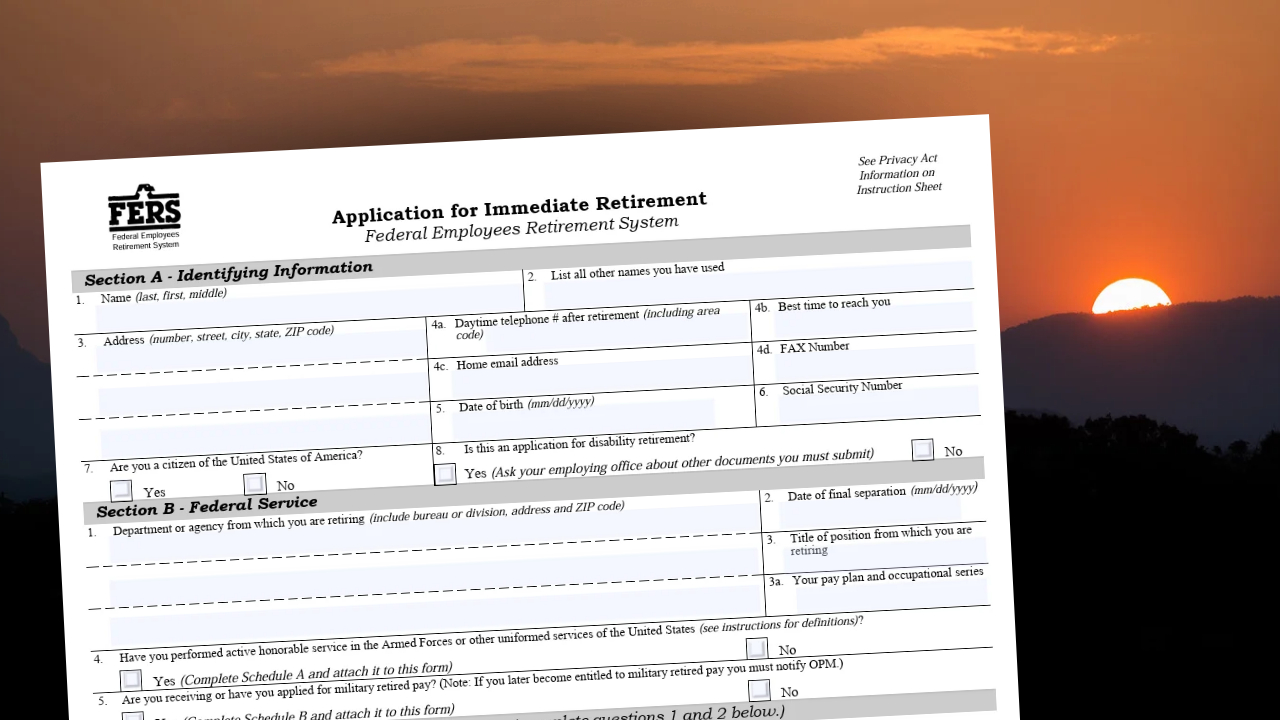



The number of Thrift Savings Plan (TSP) participants with TSP accounts valued $1 million or more has grown significantly over the last five years. The number of TSP millionaires hit a record high of 189,836 participants as of October 1, 2025.
Those older TSP participants (mainly federal retirees with sizeable traditional TSP accounts), many of whom also own sizeable traditional IRA accounts, are facing and coping with tax planning for their large traditional TSP and traditional IRA accounts. Fortunately, there is an estate planning tool available that some of these traditional TSP participants and traditional IRA owners may have overlooked. That tool is called a disclaimer.
A disclaimer is a strategic rejection of an inherited asset by an heir. The result is that portion of an individual’s bequests passes from the designated heir to another heir, typically designated by documents such as a beneficiary form or by law. In effect, the individual who disclaims the asset never owned it.
Disclaimers can be useful for traditional TSP participants who own traditional TSP accounts and/or traditional IRAs worth far more than expected. Thanks to diligent and consistent TSP contributions via payroll deduction and traditional IRA contributions over the years, rollovers from other traditional qualified retirement accounts and stock market growth, many traditional TSP and traditional IRA accounts are worth far larger than TSP participants and IRA owners anticipated. While owning sizeable retirement accounts is a problem that the average retiree would love to have, it can pose potential problems to retirement account owners when trying to minimize federal and state income taxes during the owner’s retirement years, and possible federal and estate taxes at their death.
For example, traditional IRAs and traditional TSP accounts are subject to required minimum distributions (RMDs), starting when the traditional TSP participant or traditional IRA owner becomes age 73. RMDs are federal and state taxable and RMD amounts usually increase from one year to the next. At age 73, an RMD is equal to 3.8 percent of the traditional TSP balance. A TSP participant who also owns a traditional IRA would have to take a second RMD equal to 3.8 percent of the traditional IRA balance. RMDs are included in a TSP participant’s adjusted gross income (AGI) and can have a ripple effect. For example, because an RMD is included in AGI, the RMD could push a TSP participant and an IRA owner into higher Medicare Part B and Medicare Part D income tiers, resulting in the Medicare Part B beneficiary paying Medicare monthly surcharges known as IRMAAs.
Frequently, disclaimers can help with these tax and associated issues. Needless to say, any individual thinking about making a disclaimer has to be willing to give up the inherited assets themselves. Some financial professionals would say that “the loss of an inherited asset is the price of family wealth planning.” The following example illustrates:
Howard is a retired federal employee with a huge traditional IRA worth $1.8 million, most of which he rolled over from his traditional TSP. When Howard died in 2024, he designated his wife, Sharon, as the sole beneficiary of his traditional IRA. At Howard’s death, Sharon rolled over Howard’s $1.8 million traditional IRA to her traditional IRA. Unfortunately, Sharon died a year after Howard died.
Sharon’s daughter, Sarah, age 52, is set to inherit Sharon’s huge traditional IRA. Sarah is in a 35 percent (the next to highest federal marginal tax bracket) federal marginal tax bracket and a nine percent state marginal tax bracket. Under the provisions coming out of SECURE Act 2.0, Sarah must withdraw the inherited IRA funds (all of which are taxable when withdrawn), within 10 years.
Sarah has two young adult children who are in the lower tax brackets and who are listed as “contingent” beneficiaries on Sharon’s IRA beneficiary form. Because they are listed as contingent beneficiaries, Sarah can disclaim all or part of the traditional IRA and have it distributed directly to her two children. Her two children will have 10 years to withdraw the inherited IRA funds, and annual withdrawals starting the year after their grandmother died. The family’s income tax liability for withdrawing the inherited IRA funds will most likely be lower than if their mother Sarah kept the inherited IRA.
It needs to be emphasized that in this example Sharon’s daughter Sarah does not have to perform a disclaimer. One reason Sarah may not disclaim is because her young adult children cannot manage an inheritance. Another reason is Sarah may need the inherited funds at some time in the future. Disclaimers can enable post-death moves based on current circumstances long after an estate plan has been established. But there are more things to know about disclaimers.
Disclaimer Basics
A disclaimer is a legal document that consists of an absolute and unqualified renunciation of any beneficial interest, use, enjoyment or ownership of an asset. The person who disclaims via this legal document has, in fact, passed it to another heir, typically designated by documents such as a beneficiary form or a will, or by law.
For federal law purposes, the deadline to establish a disclaimer is nine months after the death of the owner. State laws vary as to who receives the official disclaimer document. In some states, the document must be filed with a local court.
In order for a disclaimer to be valid, the designated heir disclaiming must not have benefited from the disclaimer. Once a disclaimer is finalized, it cannot be undone.
What is Not Flexible with a Disclaimer?
The heir who disclaims the assets does not have the right to designate the recipient of the disclaimed asset. The law treats individuals who disclaim the assets as though they died and look to the original owner’s designated beneficiaries and the law as to who is the next in line to inherit the assets.
Naming Heirs
In order for a potential disclaimer to work, estate attorneys recommend that the original asset owner designate “tiers” of heirs. For example, the primary beneficiary of an IRA may be a spouse; The beneficiary form typically names children as secondary or contingent beneficiaries and perhaps grandchildren after that. In the example above with Howard and Sharon, Sharon named her daughter Sarah as the primary beneficiary after Sharon inherited Howard’s IRA. Sharon named her two adult grandchildren as contingent beneficiaries.
Exercise Caution with Disclaimers to Minor Children
It is important that anyone considering naming a minor child as a secondary or a contingent beneficiary for receiving disclaimed traditional TSP and traditional IRA funds, should first check with an estate attorney in that state. The following are some questions they should ask the estate lawyer: Would a court need to appoint a guardian to manage the inherited assets? Would income to the minor be taxed at the parents’ tax rates via the IRS “kiddie tax” rules? How would a minor child who inherits an IRA take mandatory annual withdrawals from an inherited IRA?
Charities Are Good Candidates for Disclaimed Assets
For some individuals, a favorite charitable organization can be an ideal beneficiary for disclaimed assets. Donations to charities of traditional IRA assets are triple-tax-free because no federal income tax is due on IRA contributions, growth or withdrawals.
A TSP participant and IRA owner who wants to maintain flexibility and trusts the heirs’ judgment would leave the IRA to the heirs, and they can disclaim it to the charities, if appropriate.
Federal employees and retirees who are considering the use of disclaimers are advised to consult with an estate attorney in their residence state. Disclaimers can be useful for post-mortem planning, whether for tax-focused or creditor protection focused planning. For many individuals, a disclaimer is another planning tool that can be used during the administration of an estate or trust.

A former career Federal employee, Ed has published a staggering 1,200+ separate articles on Federal Benefits and Retirement!
Just “Google” his name, and you are likely to find a plethora of sites that contain his writings. Drawn to its mission to reach, teach
and serve Feds, Serving Those Who Serve is the only financial planning practice with which Ed has chosen to affiliate in over
20 years teaching. In addition to conducting Federal Benefits seminars for Serving Those Who Serve, you can find Ed’s
writings here on our blog in the FedZone, and on Fed-Soup, MyFederalRetirement, FederalNews Radio and NITP.
He is a member of the Maryland Society of Accountants, the National Association of Enrolled Agents, the International Society of Certified Employee Benefits Specialists, the Financial Planning Association, the National Association of Health Underwriters,
and the Society of Financial Service Professionals. Since 1999, Ed has taught many thousands of Federal employees about
their benefits, in person and at Federal agencies all over the country. Ed is a true national treasure.
Edward A. Zurndorfer is a CERTIFIED FINANCIAL PLANNER™ professional, Chartered Life Underwriter, Chartered Financial Consultant, Chartered Federal Employee Benefits Consultant, Certified Employees Benefits Specialist and IRS Enrolled Agent in Silver Spring, MD. Tax planning, Federal employee benefits, retirement and insurance consulting services offered through EZ Accounting and Financial Services, and EZ Federal Benefits Seminars, located at 833 Bromley Street – Suite A, Silver Spring, MD 20902-3019 and telephone number 301-681-1652. Raymond James is not affiliated with and does not endorse the opinions or services of Edward A. Zurndorfer or EZ Accounting and Financial Services. The information has been obtained from sources considered to be reliable, but we do not guarantee that the foregoing material is accurate or complete. While we are familiar with the tax provisions of the issues presented herein, as Financial Advisors of RJFS, we are not qualified to render advice on tax or legal matters. You should discuss tax or legal matters with the appropriate professional.
The FedLife Podcast is your in-depth, biweekly deep dive into the world of federal benefits and retirement planning. Hosted by federal benefits expert Ed Zurndorfer and Dan Sipe of Serving Those Who Serve, each 30-minute episode unpacks the complexities of FERS and CSRS retirement, FEHB and Medicare, survivor benefits, tax planning, and more. Designed for federal employees and retirees who want more than just the basics, FedLife goes beyond the headlines to explore the rules, nuances, and strategies that can make a meaningful difference in your retirement. Remember: it’s your Fed life, make it a great one.
The Fed15 Podcast is your weekly 15(ish)-minute briefing on federal benefits and financial planning, built specifically for federal employees and retirees. Hosted by Dan Sipe and Katelyn Murray of Serving Those Who Serve, each episode delivers clear, actionable guidance on topics like FERS and CSRS retirement, TSP strategies, FEHB, survivor benefits, tax planning, and more! Whether you’re five years from retirement or already there, The Fed15 helps you cut through the noise, avoid costly mistakes, and make confident decisions about your federal benefits.