

Most federal employees and retirees receive various types of income that are not subject to mandatory federal income tax withholding. Among these income-types are interest, dividend and capital gain income, pension income and IRA income, CSRS and FERS annuities, rental income and Social Security. But it makes no difference as to the type of income or the source of the income, the IRS wants to collect the tax due on income as soon as the income is received. This column discusses why some federal employees and retirees are advised to make quarterly estimated tax payments to the IRS in order to avoid IRS imposed late-tax payment penalties.
These late-tax payment penalties are for underpayments of estimated tax. The estimated tax penalty appears on line 38 of 2025 IRS Form 1040, as shown here:

This tax penalty often applies when a tax filer has avoided paying or mistimed making quarterly estimated tax payments to the IRS. The purpose of quarterly estimated tax purposes is pay the federal income tax on income that is not subject to mandatory withholding such as salary income. Estimated tax payment penalties have surged over the last two years. According to IRS data, these penalties reported by tax filers earning between $200,000 and $500,000 were about $1.3 billion for tax year 2024. triple the amount of penalties for tax year 2023. Over the same period, the number of tax filers affected by these penalties grew 30 percent, to about three million.
It is important to present some background information about estimated tax payments. The US tax system works on a “pay-as-you-earn-basis.” That is why employers withhold federal (and state) income taxes, and Social Security (FICA) and Medicare Part A (hospital insurance) payroll taxes from employee salaries. The US Treasury’s goal is to collect on a regular basis the taxes due on taxable income not subject to withholding. This is done through estimated tax payments. To accomplish this, the IRS has set up a timetable calling for estimated tax payments four times a year. Although the payments are commonly called “quarterly,” the payments do not coincide with calendar year quarters. The following table summarizes the “quarterly” income periods and due dates for the estimated tax payment for calendar year 2026:.
| Quarter Number | For Income Received | Estimated Tax Due |
| 1 | January 1 – March 31, 2026 | April 15, 2026 |
| 2 | April 1 – May 31, 2026 | June 15, 2026 |
| 3 | June 1 – August 31, 2026 | September 15, 2026 |
| 4 | September 1 – December 31,2026 | January 15, 2027 |
To prevent “gaming the system”, the IRS requires individuals with income not covered by withholding (for example, investment income, income resulting from traditional IRA conversions to Roth IRAs or traditional TSP conversions to Roth TSP) to make a federal estimated tax payment in any quarter in which income is received but with federal income withholding. For example, if federal employee or retiree converts $10,000 of the employee’s traditional TSP to the Roth TSP in February 2026 and waits until December 2026 to pay federal income tax on the $10,000 conversion, then the employee or retiree could owe an underpayment penalty for delaying payment three quarters into the fourth quarter of the year.
Learn more about your retirement benefits at our No-Cost webinars, featuring Ed Zurndorfer -
Step 1. An employee or retiree should look at their completed 2025 Form 1040 line 24 (total tax for 2025). For example, suppose the total tax for 2025 is $21,500.
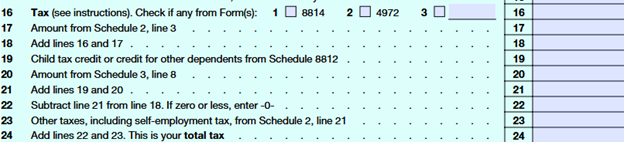
Step 2. Subtract from the amount in Step 1 the amount the employee or retiree expects to have withheld in Federal income taxes from wages, pensions, the TSP, IRAs, etc. during 2026. For example, suppose that amount is $18,500.
Step 3. Subtract the amount in Step 2 from the amount in Step 1. That gives the employee or retiree the amount to be made up through estimated tax payments. Divided the result by 4 and that is the amount that the individual pays to the IRS each quarter. In this example, $21,500 less $18,500 is $3,000; $3,000/4 or $750 is therefore the amount of the estimated tax payment each quarter throughout 2026 in order to eliminate any possible withholding penalty during 2026.
The IRS’ safe harbor for income tax withholding and estimated tax payments refers to a regulation that eliminates an individual’s liability as long as the individual acted in good faith. In the case of income taxes, it is an amount that protects the individual from IRS penalties for income tax underpayments.
For higher income individuals – individuals with previous year’s adjusted gross income (AGI) of more than $150,000 for married couples filing jointly and single individuals, ($75,000 for married individuals filing separately) the “safe harbor” percentage is increased to 110 percent of the previous year’s total tax.
Finally, employees can avoid paying estimated tax payments by filling out and submitting to their payroll office an updated W4 withholding form in order to request additional federal income tax withholding. CSRS and FERS request can request from OPM’s Retirement Office additional federal income tax withholding from their CSRS or FERS annuities. They may do so by going on their “services online” account with OPM. Social Security recipients can request federal income tax withholding from their monthly Social Security benefit payment. However, with 25 percent of calendar year 2026 having passed, some employees and retirees may have to increase the amount of federal income tax monthly withholding by an additional 25 percent through the end of 2026.
The information has been obtained from sources considered reliable but we do not guarantee that the foregoing material is accurate or complete. Any opinions are those of Serving Those Who Serve writers and not necessarily those of RJFS or Raymond James. Any information is not a complete summary or statement of all available data necessary for making an investment decision and does not constitute a recommendation. Investing involves risk and you may incur a profit or loss regardless of strategy suggested. Every investor’s situation is unique and you should consider your investment goals, risk tolerance, and time horizon before making any investment or financial decision. Prior to making an investment decision, please consult with your financial advisor about your individual situation. While we are familiar with the tax provisions of the issues presented herein, as Financial Advisors of RJFS, we are not qualified to render advice on tax or legal matters. You should discuss tax or legal matters with the appropriate professional. **